LED Lights Are Great For Today’s Needs
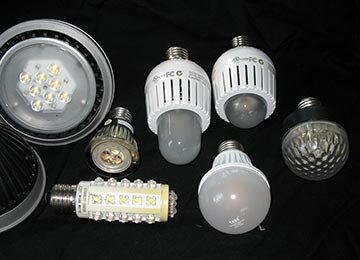
LED Lights Are The New Trend
What is the LED light about?
LED light is run through a semiconductor which emits light when a current is passed through it. The diode that is used in this material is made of many thin-layered semiconductors. Unlike incandescent light bulbs which generate electricity by generating heat or the CFL (Compact Fluorescent Lamps) which give light from gas, LED lights produce lights when a current is passed through a semiconductor. In a diode, there are various layers of semiconductors, some have excess of electrons and some have deficiency of electrons.
When an electric current is passed through the semiconductor, the excited electrons from a higher density level will move towards the lower density materials. This process known as Electroluminescence emits photons and thus produces light.
What can LED lights work for?
LED lights have various uses. They are most commonly used in digital displays like a digital clock or digital signboards and as backlights in the mobile devices. With the technology developing rapidly, LED lights are now being used in automotive lighting, household lighting and even industrial lighting. The household sector has been growing particularly quickly.
Where are lights used at home?
A good number of consumers in the household sector are using LED lights not only for indoor lighting but also for outdoor purposes like under ground lights also known as LED in-ground lights. Walkways and swimming pools are common areas where in-ground lights are used. These lights have to be more durable and should have more life than a traditional light bulb because of the fixture used. This is made in a setup that’s easier to manage after it’s installed as you’ll know if it is going to burn out by seeing if it’s dim.
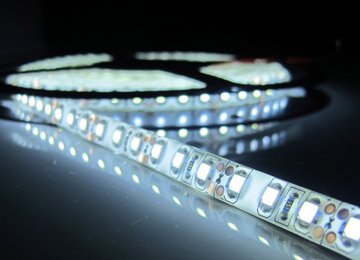
They Can Be Used In Many Different Ways
How efficient are LEDs?
Technology experts believe that the efficiency of an LED light is about 85 percent more than a light bulb and about 5 to 10 percent than a CFL. CFL has not been a viable option for household lighting because it contains mercury, which can become an ecological hazard when disposed of by the consumers. In fact, according to some ecologists, if a CFL is broken in your house then it has to be treated like a hazardous material. These factors have discouraged consumers to move from a traditional light bulb to the efficient CFL.
However, the price of a LED light is much more than that of a light bulb or a CFL and hence this has been discouraging consumers from going for the LED lighting option. Nevertheless, if the price is compared to the life span and efficiency of the LED, the cost is much less than the cost incurred by a consumer in a light bulb over a long period of time. A LED can give light for about 30,000 to 50,000 hours against a light bulb, which can typically give light for about 800 hours.
Expenses should be considered
Although the benefits of LEDs are clear, some experts believe that due to high price of an LED light that a consumer would have to shell out at one go, LED light industry not yet has the right market in the lighting industry that it deserves. Nevertheless, technology experts have been working towards this issue and over the previous few years have already been successful in bringing down the price of LED lights.
So, why are LED lights so expensive? The main reason for this is that LED lights do not naturally produce the white or yellow lights that are important for lighting in the household and the industry sector. LED lights naturally emits a blue light, and thus for it to give white light, manufacturers have to prepare it with a yellow phosphor
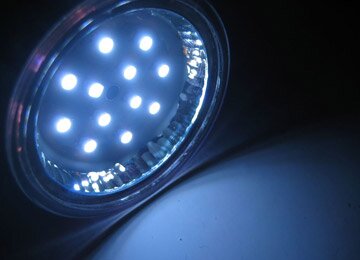
Environmentally Friendly Lights
However, with changing times and innovative technology coming into the industry, the prices of LED lights are slated to go down. If the price of LED lights can be brought down, it definitely has the potential to become one of the most energy efficient and cost effective solution in the lighting industry.
You should see what LED lights can do for you. These are easy to manage and maintain and will last for a while without using too much energy. However, you should see how expensive they might be.
Creative Ways To Dump A Relationship

What To Do When He Cheats On You
Relationships end for reasons couples can’t anymore hold on to. It is best to end it and loosen all the ties to lighten up the burden. Sometimes the fault lies with boyfriend or girlfriend. But if either one did it because they cheated merits the reason to dump off the other. And dump off you will but something worthwhile so that he will remember what he lost.
Post it and let it be known

Make Him Feel The Pain He Cost You
Hire a Messenger
If your partner cheated on you for some stripper, then why not give him one something he wants. Bring the news of your break up and dumping him by letting a stripper bring it to him at his home with his family, or when he is with his friends, or anywhere public where there are a lot of people.
This will remind him of the sexual pervert he really is and will also embarrass him in the process.
Parting Gift
It’s always a very satisfying feeling to dump someone who has played you for a fool. But not just dumping the ordinary way, but in ways he won’t expect and will surely be ashamed of in the end.

Be Creative At The Moment Of Dumping Him
Always get back to those who have broken your heart. It’s not enough to just simply say a few words. Make it a worthwhile experience to let all of them know that this is what they will get if ever they will do something to make you feel bad.
3 Powerful Tips On How To Lose Man Boob

Feeling Ashamed Of Those Man Boobs? Lose them!
There are men who have boobs. The fact that they don’t like this just like they hate bellies came to a point that they look for solutions on how to ‘dissolve’ it. The man’s boobs are actually fat tissues that cover their chest’s muscles. In order for you to get rid of this, you need to perform some exercises like sit-ups. Aside from that, there are two excellent tips are proven to be very effective to lose chest fats.
1. You must eat healthful foods
The man’s boobs are just results of years of eating unhealthy foods like junk foods that obviously contain more calories compared to the whole foods. However, the fact that you stop eating junk foods is not a surety that your boobs will be dissolved, but it can be a great help. It means that eating healthful foods can loss fats, and since junk foods are actually junks, so it can’t help you with your agenda.
2. Get stronger
There are three benefits that you can get following this second tip.

Men With Boobs Are Not Sexy… Get Fit
- Your muscles are obviously directly associated to strength gains. Thus, by getting stronger through Bench Press you will eventually shape your chest and will get rid of your boobs if continually done.
- By lifting more weights you will burn more calories.
- The strength training requires you to select healthier foods and through that it makes you to have better diet.
3. Fix your posture
If your work requires you to sit in front of your computer the whole day can result you to have chest muscles and slouching of shoulders. This is the same is true to the case of your hip that tightens your muscles on the hip part. This can also cause you to have bigger belly most especially if right after you eat, you then sit down. In your case, you need to correct your body posture especially on your shoulder part.

Exercise And Lose Those Boobs
There are also instances wherein a person is having a medical condition called Gynecomastia. This is one of the results of using the illegal drugs like marijuana. If you think you are having this kind of condition, seek help of medical experts to help you get rid of man’s boobs because this can also be the signs of other medical conditions that can worsen your health status.
The change of lifestyle can also help you solve this kind of problem. Try to allocate even an hour of exercise everyday like walking and jogging. While doing these basic exercises, make sure that you follow the correct posture especially on your shoulder part so that there could be muscle changes on that particular area. You can also visit a gym and ask the instructors of what particular exercise is better for you to dissolve that boobs that makes you feel embarrass. For sure they can advice or recommend what particular equipment to use. Commonly, strength training is what they would suggest and in a matter of few months, man’s boobs will never be seen again.
What You Should Know About Refinancing

If You Have A Mortgage You Probably Need To Refinance It
How long will you stay in your home?
Refinancing might not be right for you if you plan to leave your home within the next five years. Refinancing has closing costs and these costs can easily outweigh the benefits. After five years, you typically break even and that is the time when you’ve already paid refinancing costs.
Does your current mortgage have a prepayment penalty?

Inform Yourself About And Prepayment Penalties
Will it lessen your tax savings?
If mortgage interest is claimed on a tax return, you are going to have lesser mortgage interest to subtract once you refinance to a lower rate. The best thing to do is to speak with a tax advisor to know if refinancing will increase your overall savings.
Can you build equity faster?
Going for a mortgage with a shorter term is sensible for a homeowner who has the capacity to have higher monthly payments than the time he or she refinances. One can save a substantial amount of money when the term is shorter as the interest rate is lower.
Can you reduce your monthly payments?
If there has been a change in your cash flow, you can probably get lower monthly payments if you refinance and go for a longer term. It will increase the interest, but it will also provide relief considering the current state of your finances.
Can you cash out on some of the equity?

Do The Math And Decide If You Will Refinance Your Mortgage
The thought of refinancing can sometimes be overwhelming for some homeowners. Before you even decide to do it, make sure that you are fully aware of its benefits. Do not forget to ask your lender anything that isn’t clear to you. The best time to go for refinancing is when the benefits outweigh the costs. Don’t just refinance because you want to. There is a right time for it and that’s exactly when you should decide to refinance.
Harnessing Technology To Bring Employees To Greater Productivity

Technology Is Bringing Business To A New Level Of Productivity
(1) Easy access to data puts an entire library at your fingertips
It started with Computer Based Training (CBT) that became widespread in the 90s when employees can read relevant content from a CD or DVD complete with animation, images and video materials that explain complex processes. Corporate databases that archive real world experiences and problems have become standard knowledgebase tools to aid systems developers/marketers and technical help desk call centers to retrieve a wealth of knowledge in helping customers and employees. Today, companies can no longer operate without such knowledge data warehouses accessible through client PCs and laptops anywhere on the planet.
The ability to access data anywhere has grown to include entire collections of books, journals, legal and court cases, and operating manuals that would occupy entire floors. Today, an iPad, Kindle or any of those PC Tablets can have instant access to up to more than 4000 titles at any time. Their contents are made available as eBooks they can store in their mobile computing devices or from remote cloud-based database servers anywhere on earth.
(2) Broadband Technology brings remote learning a real-time multimedia learning experience

Use Modern Technology Or Stay Behind Everyone Else
Video Conferencing which has been quite expensive and cumbersome to set-up in conference rooms using proprietary telecommunication technologies in the past is now readily available over broadband Internet. Going beyond its telecommunication value, video conferencing over the Internet allows inexpensive real-time classroom interaction with fellow students remotely, whether in several branch locations worldwide, or from homes. Broadband Internet has made it possible for a professor or lecturer to be captured talking in a seminar in London, and be participated in and queried by workers from Manila, Bangalore, Hong Kong, and New York concurrently. It is precisely this technology that has made physical movement through expensive Business Class flights a total waste of time and money for many corporate workers and management staff just to attend a conference or seminar.
(3) Social Networking transforms how we share information
Sharing data can be as simple as sending a file over the Internet as an email attachment, or downloading files from FTP sites. But thanks to the emergence of the social networking phenomenon, collaborating work over a project and learning from experiences with fellow workers across time zones in real time are now common features in online education and getting things done in a world made increasingly interactive with the Internet. More than just Facebook, Twitter and other social networking sites, the Web 2.0 generation has created blogging and collaborative document sharing with Google and similar online services to become a channel for learning and training never thought possible until about 5 years ago.
Training will never be the same again

Be Technologically Savvy
